What an LFT is
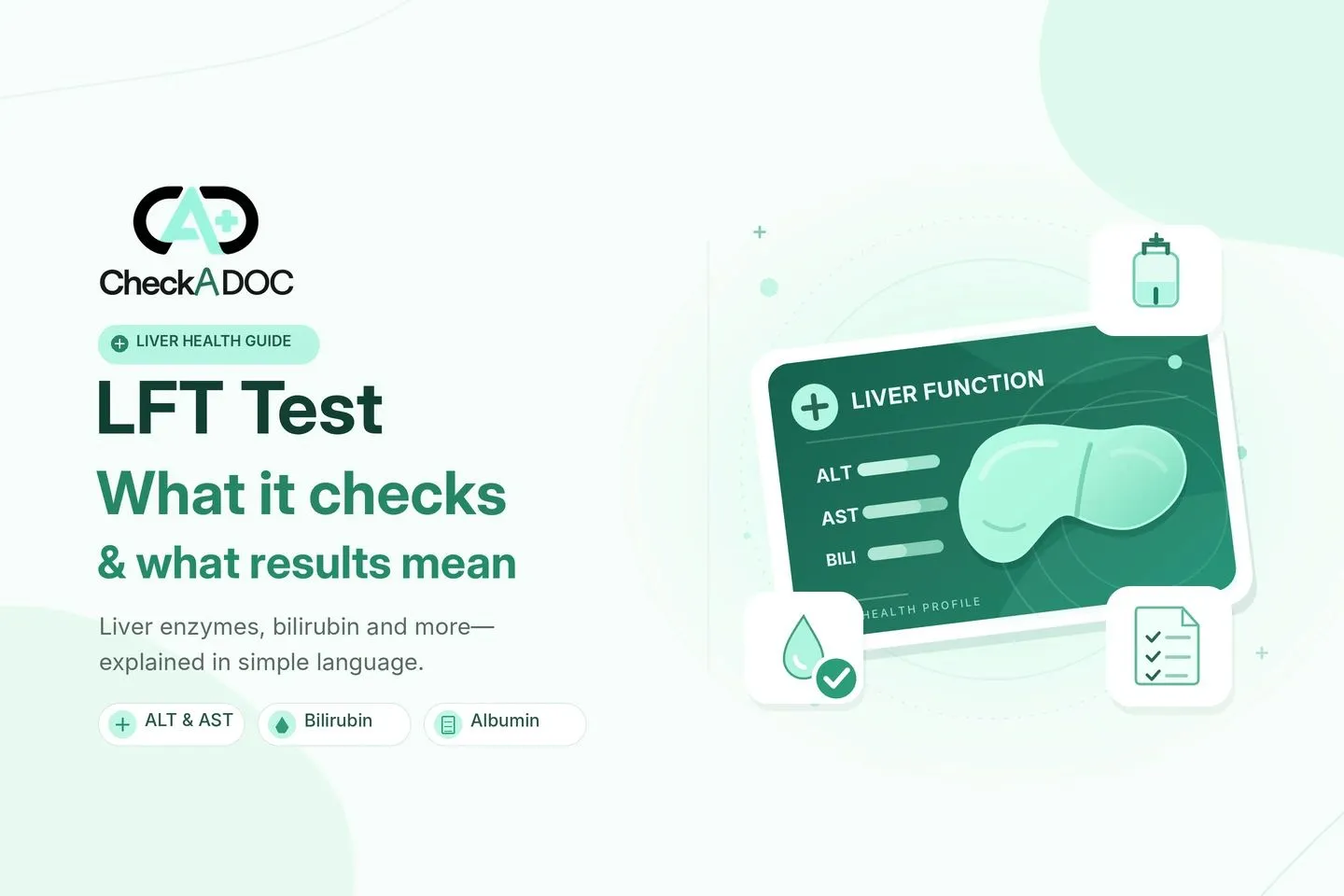
An LFT, short for liver function test, is a set of blood tests run on one sample. Together they show four things:
- whether liver cells are inflamed or damaged
- whether bile is draining as it should
- how much protein the liver is making
- how well the liver is clearing bilirubin from the blood
Your doctor reads the results alongside your symptoms, other health conditions, medicines and any earlier reports.
Labs in Pakistan list the test as LFT or liver function test. The tests included (and the price) differ from lab to lab. Before you pay, check that the panel covers everything your doctor wrote on the slip.
Tests on your LFT report
Each test usually has its own line on the report, with your result and the lab's reference range next to it. Some reports use older names: SGPT for ALT, and SGOT for AST.
Albumin
Albumin is a protein made by the liver. A badly damaged liver makes less of it, so low albumin can be a sign that liver disease is getting worse.
Albumin can also be low for reasons unrelated to the liver, kidney disease and poor nutrition among them.
Bilirubin
Bilirubin is a yellow pigment left over when old red blood cells are broken down. The liver takes it out of the blood and passes it into bile. Reports often split it into total, direct and indirect bilirubin.
Bilirubin rises when the liver isn't working properly or when a bile duct is blocked.
At high levels it turns the skin and the whites of the eyes yellow. This is jaundice, called yarqan or peeliya in Urdu.
If bilirubin is only slightly high and everything else on the report is normal, the cause is often Gilbert's syndrome. This common inherited condition is harmless and does not lead to liver damage.
ALT (SGPT)
ALT is an enzyme found mostly inside liver cells. When those cells are inflamed or injured, ALT leaks into the blood. A high level can mean either sudden (acute) or long-term (chronic) liver inflammation.
ALP (alkaline phosphatase)
ALP comes mainly from the liver and from bone.
A high ALP together with other abnormal liver results usually suggests a problem in the bile ducts.
Children have higher ALP than adults because their bones are still growing, and pregnancy raises it as well. Even a healing fracture can push it up for a while.
Other tests you may see
Some labs add AST (SGOT), GGT, total protein or globulin. Ask the doctor who ordered the test what these show in your case.
Why doctors order an LFT
Doctors use LFTs to find liver disease and then to keep an eye on it.
At a first visit, the doctor may add other blood tests depending on your symptoms and risks, for example a hepatitis B and C screen or tests for autoimmune liver disease. If you take certain long-term medicines, you'll probably have LFTs at set intervals so side effects can be caught early.
Cirrhosis
Cirrhosis is severe, long-term scarring of the liver. You are more likely to develop it if you:
- have hepatitis B or C
- live with obesity
- have type 2 diabetes
- have fatty liver disease (NAFLD, also called MASLD)
- regularly drink a lot of alcohol
- have an autoimmune liver condition, or an inherited one such as Wilson's disease
There is often nothing to notice in the early stages. When symptoms do start, they tend to be vague: tiredness, poor appetite, weight loss you can't explain, nausea or vomiting, and pain in the stomach area.
Hepatitis in Pakistan
WHO estimates that over 9 million people in Pakistan have hepatitis C and about 3.9 million have hepatitis B. Hepatitis kills more than 48,000 people in the country every year. Pakistan has more people living with hepatitis C than any other country, and most of these infections go back to reused needles and unsafe blood transfusions.
Long-term hepatitis C usually causes no symptoms for decades, which is why so many cases are never diagnosed.
The only way to know is a blood test. Ask your doctor about one if you have ever had:
- a blood transfusion
- an injection or drip where the syringe might have been reused
- surgery or dental treatment
- a shave with a reused razor at a barber's
- a tattoo or piercing
It is also worth being tested if someone in your family has hepatitis B.
Hepatitis C tablets (direct-acting antivirals) cure more than 95% of people who take them, and hepatitis B can be kept under control with long-term treatment.
Pakistan runs the Prime Minister's National Programme for the Elimination of Hepatitis C.
Ask at your nearest government hospital whether free testing is offered in your area.
Reading your results
Each lab sets its own reference range and prints it beside your result. Ranges vary between labs and can depend on age and sex, so compare your number with the range on your own report.
Check the unit as well. Bilirubin, for instance, is given in mg/dL by some labs and µmol/L by others, so a "normal" figure from a foreign website may look nothing like yours.
If a result falls outside the range, take the report back to the doctor who ordered the test. They may repeat it, or order more tests to find out why.
Before your test
Ask the lab, or the doctor who ordered the test, whether to fast and for how long. For ALP, an overnight fast is preferred but not essential, because a meal can raise the level slightly for a few hours.
Hepatitis and autoimmune tests usually need no special preparation.
Write down every medicine you take, including desi and herbal remedies; some herbal medicines aren't suitable for people with cirrhosis.
Bring your old liver reports too, so the new results can be compared with them.
If you are on a liver medicine that needs regular blood tests, get them done before your supply runs out. Results can take a few days, and your next prescription may have to wait for them.
When to go to hospital
Go to the emergency department of the nearest hospital straight away if you:
- vomit blood
- pass very dark or black stool
- suddenly become confused or start slurring your words
- are struggling to breathe
The first three are emergency signs for people with cirrhosis, and they need urgent care in anyone else as well.
Don't drive yourself. Ask someone to take you, or call an ambulance (1122 where Rescue 1122 operates, or Edhi on 115), and take your medicines with you.
Signs to see a doctor the same day
See a doctor the same day if you notice any of these:
- yellowing of the skin or the whites of the eyes
- being more short of breath than usual
- swelling in your stomach, legs, ankles or feet
This applies whether or not you have been diagnosed with liver disease.
Which doctor to see
Start with the doctor who ordered the LFT. They know why it was requested and can decide whether you need more tests or a referral.
Long-term liver care is usually shared between a hepatologist (liver specialist) and a gastroenterologist (digestive system specialist). A dietitian may join in if your diet needs to change.
Take your reports and your medicine list to every appointment.