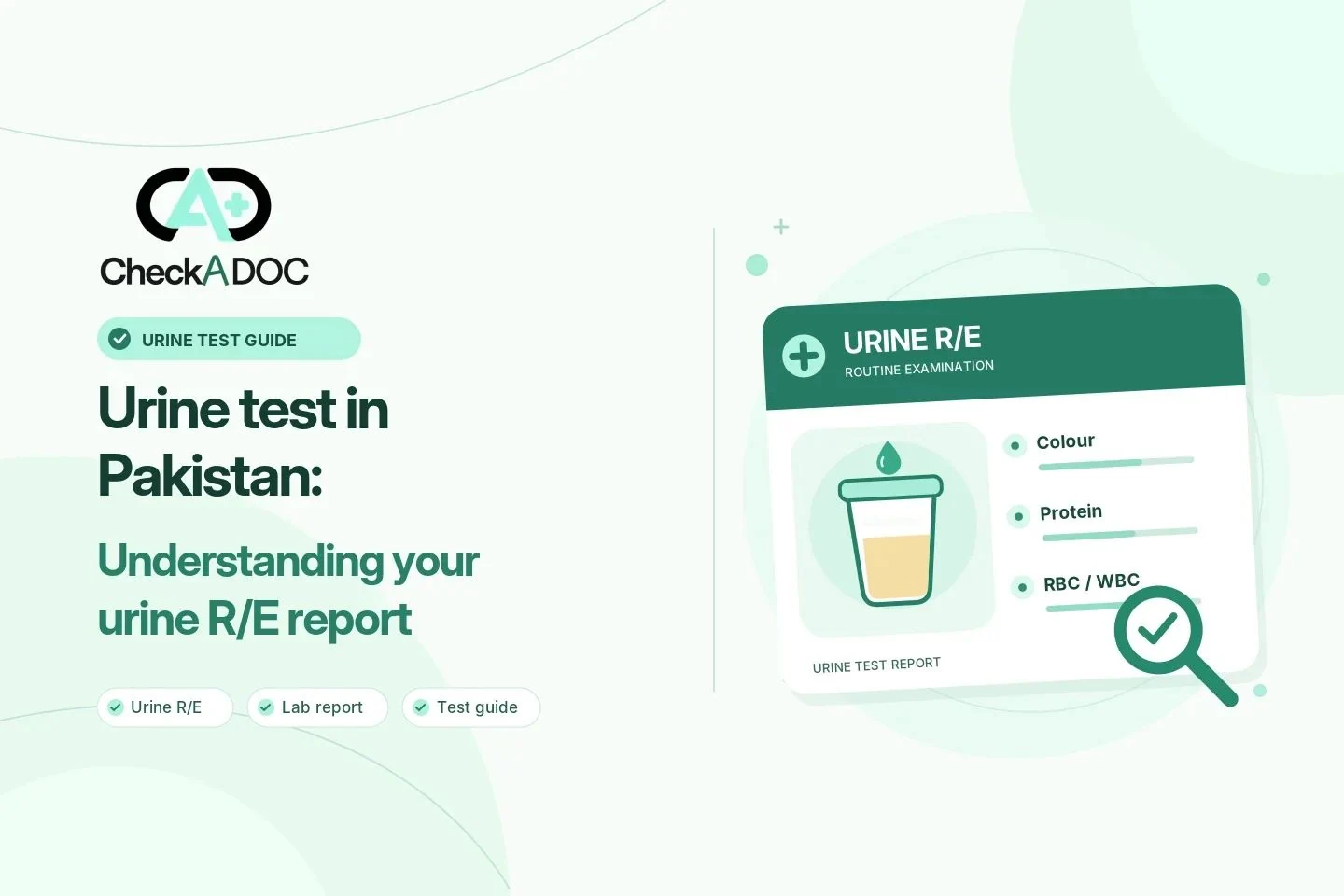
A routine urine examination, often written as urine R/E or urine complete examination on a test slip, checks a urine sample for cells and substances that may help explain a health problem. It can be used to investigate urinary symptoms and monitor conditions affecting the kidneys.
When arranging a urine test in Pakistan, show the lab the full prescription. A routine examination and a urine culture answer different questions, so confirm which tests have been requested.
What is included in a routine urine examination?
The lab may examine the appearance of the urine, test it with a chemical strip and look at it under a microscope. Your report can include colour, acidity, protein, glucose, blood cells and bacteria. The exact entries depend on the tests performed.
Urine testing can help investigate a urinary tract infection, kidney problems or diabetes. An abnormal entry is a finding to assess alongside symptoms and other results; it does not establish the cause by itself.
Ask the branch whether microscopy is included and whether the prescription also requests culture. If you are using home collection, confirm who supplies the container and how the sample will reach the lab.
Collecting a clean midstream sample
Use the container and cleaning instructions supplied by the lab. A clean-catch sample reduces the chance of skin germs entering the urine and affecting the result.
Wash and dry your hands. Open the container without touching its inside. Clean the genital area as instructed: wipe from front to back around the vaginal opening, or clean the head of the penis, retracting the foreskin if present. Pass the first urine into the toilet, then collect the middle part in the container without touching it to your body. Finish in the toilet and replace the lid.
Return the sample as instructed. Before collecting at home, ask how soon it must arrive and how to store it if there is a delay. Tell the lab if you are menstruating or have bleeding that could enter the sample. Ask for separate instructions when collecting urine from a baby.
Reading nitrites, white cells and bacteria
Nitrites can suggest a urinary tract infection because some bacteria produce them in urine. A negative nitrite result does not rule out infection: some bacteria do not make nitrites.
White blood cells, sometimes reported as pus cells or through a leucocyte esterase result, can also suggest infection. Your doctor considers these findings together with symptoms such as burning, frequent urges to urinate and fever.
Do not choose an antibiotic from a positive entry alone. A doctor may request a urine culture to identify bacteria and help select treatment. Persistent symptoms still need assessment even if a dipstick is negative.
Protein, glucose and blood on the report
Protein, glucose or blood can prompt further assessment. These findings may occur with kidney disease, diabetes, infection or other conditions. Compare the result with the range printed by the lab and let your doctor decide what needs confirmation.
Take any earlier urine and blood reports with you. If a separate urine albumin or kidney blood test has been requested, confirm that you have received that report too.
Urine culture and follow-up
A urine culture grows bacteria from the sample. It can show which bacteria are present and help the doctor choose an antibiotic. Culture generally takes longer than the routine examination; ask when the final report will be available.
Burning or frequent urination needs a doctor review. Seek prompt medical care if you also have fever or feel unwell, because a urinary infection can spread to the kidneys. Use a hospital if you are becoming very unwell or cannot obtain timely care.
Keep the prescription, sample receipt and complete report together. If the lab asks for another sample, clarify the collection instructions before repeating it.