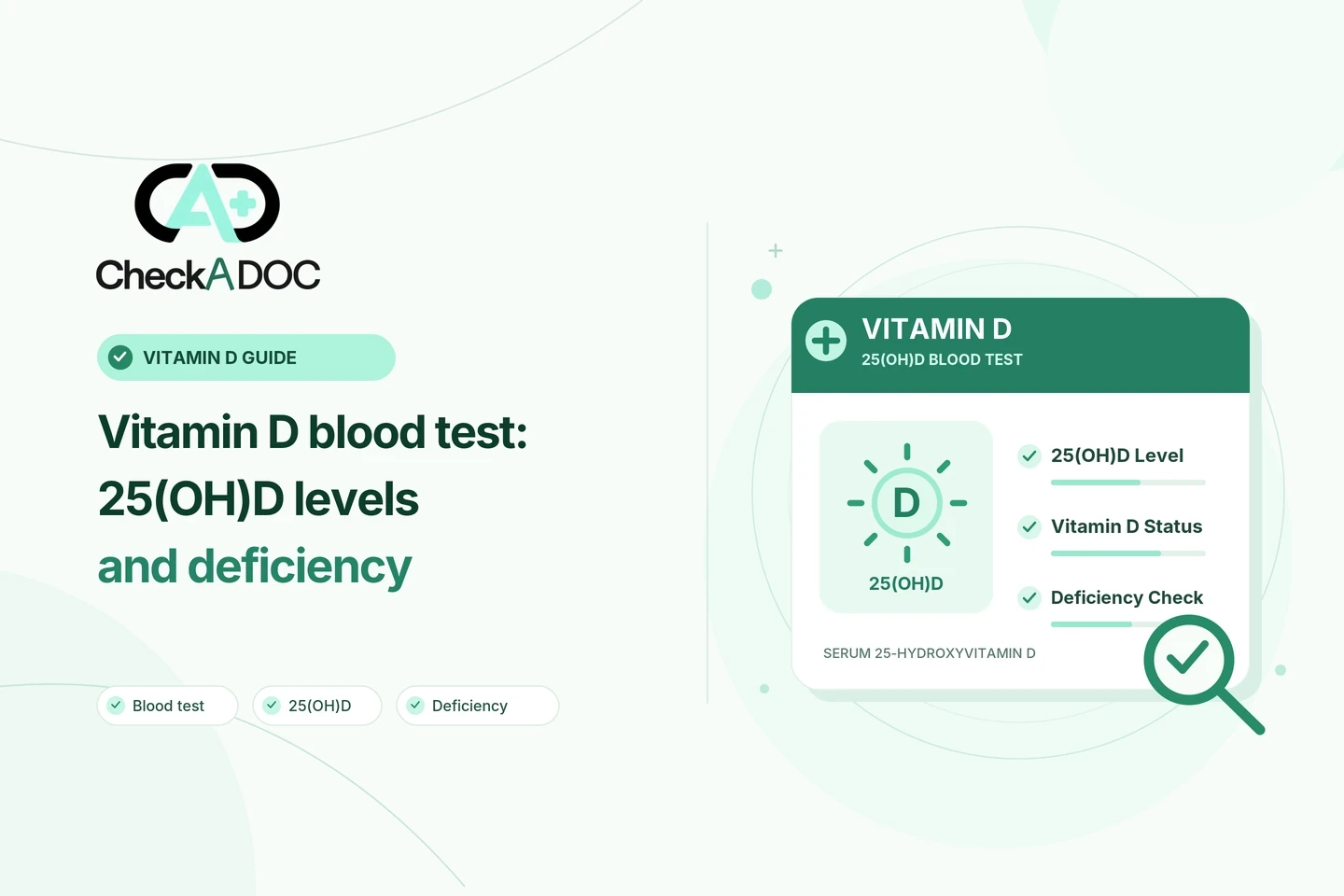
The usual blood test for vitamin D is 25-hydroxyvitamin D, written as 25(OH)D. It measures the form used to assess your vitamin D status. A different test, called active vitamin D or 1,25-dihydroxyvitamin D, has other uses.
If a prescription in Pakistan says only "vitamin D", confirm the requested test with the doctor or lab before paying. Similar names on a lab menu can refer to different measurements.
When testing may be useful
Vitamin D helps the body absorb calcium and maintain healthy bones. Severe deficiency can cause rickets in children and soft, painful bones in adults. Muscle weakness and bone pain can be reasons for a doctor to investigate.
Testing is not recommended routinely for every healthy person. A clinician may request it when there are symptoms, a bone condition, a problem absorbing nutrients, or kidney or liver disease. It can also help monitor prescribed treatment.
Living in a sunny country does not establish your vitamin D level. Time spent indoors, clothing that covers the skin, skin pigmentation and medical conditions can affect vitamin D production or use. These factors are reasons to discuss your circumstances, rather than a reason to buy a test automatically.
Choosing the test on your prescription
For a deficiency check, ask whether the requested measurement is total 25-hydroxyvitamin D. Some reports show vitamin D2 and D3 separately; the total is the relevant combined result.
The active vitamin D test, also called calcitriol, is usually reserved for particular questions, such as kidney problems or abnormal calcium levels. It is not interchangeable with a routine vitamin D status test.
Show the branch a clear copy of the prescription. Confirm the test name, whether collection is at the branch or at home, and when the report will be ready for the follow-up appointment.
Preparing for the blood sample
A vitamin D test itself normally needs no special preparation. If other tests are on the same prescription, ask whether their instructions require fasting.
Tell your doctor about supplements, multivitamins, medicines and any recent vitamin D treatment. Keep the packaging or a photograph so the product strength can be checked. Do not stop prescribed medicine simply to prepare for the test.
A small sample is taken from a vein in the arm. Brief discomfort or bruising can occur. Tell the person collecting it if blood tests have made you feel faint before.
Read the result and its units together
Vitamin D results may use ng/mL or nmol/L. These are different scales: 1 ng/mL equals 2.5 nmol/L. A result of 20 ng/mL therefore equals 50 nmol/L. Comparing numbers without checking the units can make two equivalent results look different.
Reports may label a result deficient, insufficient, sufficient or high. Thresholds are not identical across all guidance and laboratory methods. Ask your doctor to interpret the value using the report, your symptoms and the reason for testing.
A low result can reflect low intake or sun exposure, poor absorption, or a problem processing vitamin D. A high result usually relates to excessive supplement intake. Neither result tells you which treatment to take without a clinical assessment.
Food, sunlight and supplements
Oily fish and egg yolks provide vitamin D. Some foods have vitamin D added, but do not assume that every milk, cereal or other packaged food sold in Pakistan is fortified. Check the nutrition label.
There is no single sun-exposure schedule that suits everyone. Skin pigmentation, clothing, season and other factors affect vitamin D production, while ultraviolet exposure can damage skin. Discuss food and supplementation with a clinician instead of trying to correct a low result through prolonged sun exposure.
Too much supplemental vitamin D can raise blood calcium and harm the kidneys and other organs. Avoid combining several products without checking their contents. If you are taking vitamin D and develop vomiting, poor appetite or muscle weakness, contact your doctor and bring the products you use.
Children and repeat testing
Children with concerns about bone growth, muscle weakness or nutrition need a paediatric assessment. A blood test should answer a clinical question, and a child needs a treatment plan appropriate to their age.
If you have been prescribed vitamin D, ask when treatment should be reviewed and whether another blood test is needed. Keep the original result so the doctor can compare changes using the correct units.