Your doctor has written HbA1c on your slip, or you already have a report and want to know what the number says. The HbA1c test normal range used to diagnose diabetes and prediabetes is set out further down, along with what can throw the result off.
What the HbA1c test measures
An HbA1c test is a blood test that shows your average blood sugar (glucose) over the past two to three months, according to MedlinePlus. A home glucose meter tells you your sugar at one moment. HbA1c gives the longer picture.
Sugar in the blood sticks to haemoglobin, a protein inside red blood cells. Everyone has some attached, and people with higher blood sugar have more. Red blood cells live for about three months, so the test reflects roughly that period.
On a lab menu or report you may see it under another name, such as A1C, glycated haemoglobin, glycosylated haemoglobin or glycohaemoglobin. These are all the same test.
Why doctors order an HbA1c test
The test is used to screen for or diagnose type 2 diabetes and prediabetes. Prediabetes means blood sugar is higher than normal but not high enough to be called diabetes. For someone who already has either condition, it shows how well sugar has been controlled over recent months.
HbA1c is not used to diagnose type 1 diabetes, though it may be used to monitor it. It is also not used to diagnose gestational diabetes (diabetes that starts in pregnancy). Testing is advised for adults over 45, and for younger people who are overweight and have another risk factor, such as a parent or sibling with type 2 diabetes, or high blood pressure.
A doctor may also ask for it when someone has symptoms of diabetes. These include:
- Feeling very thirsty
- Peeing a lot
- Losing weight without trying
- Feeling very hungry
- Blurred vision
- Numb or tingling hands or feet
- Sores that heal slowly
- Having more infections than usual
HbA1c test normal range and diagnosis cut-offs
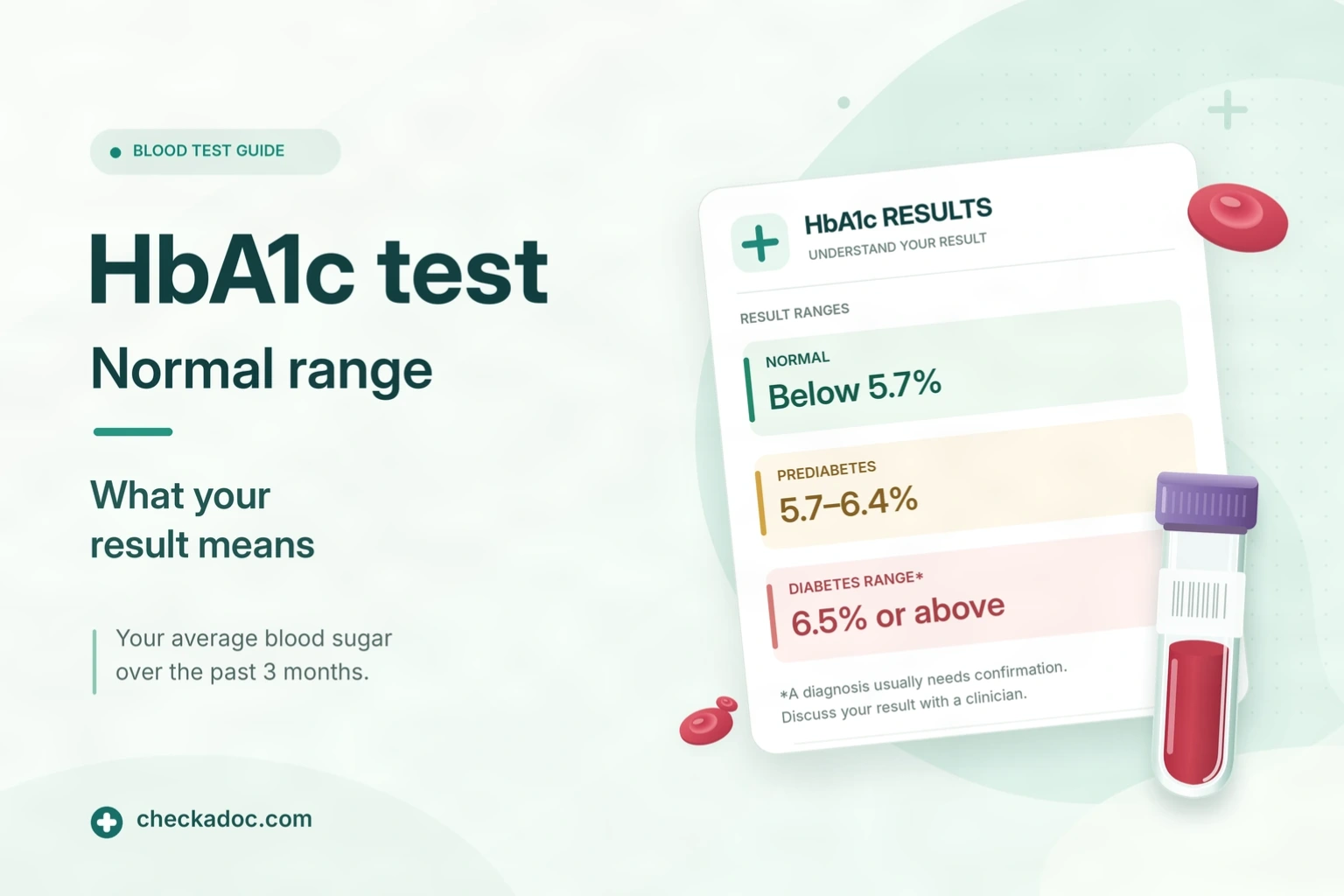
According to CDC, the ranges listed below are used to diagnose prediabetes and diabetes. They are given in percent (%).
Each lab prints its own reference range on the report, and ranges differ between labs and with age and sex. Treat the figures as a guide: what is normal for you depends on your health, age and other factors. Check the unit printed beside your number. If your report gives the result in a unit other than percent, ask your doctor how it compares.
One high result does not always settle the question. Doctors often use more than one test before diagnosing diabetes, so you may be asked to repeat the HbA1c or to have a fasting blood glucose test or an oral glucose tolerance test (OGTT).
- Normal: below 5.7%
- Prediabetes: 5.7% to 6.4%
- Diabetes: 6.5% or above
How often the test is repeated
Most people with diabetes have an HbA1c at least twice a year. Some need it more often, depending on their treatment plan or other health conditions. With prediabetes, the test is usually repeated every 1 to 2 years. After a normal result, your doctor will suggest when to test again based on your age and risk factors.
Do not change or stop a medicine because of one report. Keep taking the dose on the pack or the one your doctor gives. Take the report to your next appointment so it can be read alongside your other results.
Preparing for an HbA1c test
A health worker takes a small blood sample from a vein in your arm, or sometimes from a finger. The draw usually takes less than five minutes.
Tell your doctor about every medicine you take. Some, including opioids and some HIV medicines, may affect the result, but do not stop any medicine unless your doctor tells you to. Let your doctor know if you are pregnant, since pregnancy can also change the number.
Look at the other tests on your slip before you go. Some, such as a cholesterol test, may need fasting even though HbA1c does not, so ask the lab or your doctor how many hours to fast, if at all.
Things that can affect the HbA1c result
Because HbA1c depends on red blood cells, conditions that change those cells can make the number misleading. The factors below can falsely raise or lower the result.
In some of these cases a doctor may use a different test to diagnose diabetes or prediabetes. If any of them apply to you, mention them when the test is ordered.
- Severe anaemia
- Certain blood disorders such as sickle cell anaemia or thalassaemia
- Kidney failure
- Liver disease
- Recent blood loss or a blood transfusion
- Early or late pregnancy


